A chemical company is locked in a battle over whether a resin used in its plastic packaging is free of chemicals with estrogenic activity (EA).

Thursday, 25 October 2012
Lawsuit battle over resin used in plastic packaging
Lawsuit battle over resin used in plastic packaging:

China food safety firm secures millions of dollars in sales
China food safety firm secures millions of dollars in sales:
China Health Labs & Diagnostics has secured $11.6m of orders for food safety products and its Type B BK Food Safety Rapid Test System (BK-iRT) from theBeijingmunicipal government.
Outbreak of norovirus in Germany 'over'
Outbreak of norovirus in Germany 'over':
German food safety chiefs have said that a norovirus outbreak that sickened more than 11,000 people is over.
E.coli outbreak linked to nearly 200 cases in Northern Ireland
E.coli outbreak linked to nearly 200 cases in Northern Ireland:
The Northern Irish Public Health Agency (PHA) is investigating an outbreak of E.coli O157 which has been linked to 25 confirmed and 154 probable cases.
British Lion eggs sourcing call after salmonella scare
British Lion eggs sourcing call after salmonella scare:
British Lion Egg Processors (BLEP) are urging manufacturers to buy product derived from British Lion certified eggs after an outbreak of salmonella that hit seven people in the UK.
UK aims to standardise front-of-pack nutrition labels
UK aims to standardise front-of-pack nutrition labels:
The UK government has said it will roll out a new voluntary front-of-pack nutrition labelling scheme by next summer to standardise labels across retailers and food manufacturers.
Tuesday, 23 October 2012
Reminder to food handlers with food poisoning
Reminder to food handlers with food poisoning: The Food Standards Agency is reminding those who work with food and are suffering from symptoms of food poisoning, or those in close contact with someone who is, to stay away from work and see their GP. This is in light of the current outbreak of E.coli O157 in Northern Ireland.
Maternal acrylamide linked to low birth weight children
Maternal acrylamide linked to low birth weight children:
High maternal intake of acrylamide-rich foods could be linked to a higher risk low birth weight children, according to new research.
Salmonella in Smoked Salmon Sickens Nearly 1,000 in Netherlands
Salmonella in Smoked Salmon Sickens Nearly 1,000 in Netherlands:
By Gretchen Goetz
 At least 950 people in the Netherlands are now known to have fallen ill in a Salmonella Thompson outbreak linked to salmon. Three elderly victims have died.
The outbreak was first reported October 1 after more than 200 Salmonella illnesses were linked to smoked salmon sold by Netherlands-based Foppen. Subsequent environmental testing revealed the presence of the outbreak strain of the bacteria in one of the company’s manufacturing plants in Greece.
Now the outbreak has grown to include almost 1,000 Dutch victims, three of whom have died, reported the Netherlands’ National Institute for Public Health (RIVM) Thursday, according to MedicalXPress.
Meanwhile, health officials have identified a cluster of Salmonella Thompson infections in the U.S. The genetic fingerprint of this bacteria is indistinguishable from that of the strain causing the Dutch outbreak; however, patient interviews have revealed that Foppen smoked salmon was not a likely source of infection for these cases, according to Lola Russell, spokesperson for the federal Centers for Disease Control and Prevention.
“We have the same PFGE (pulsed-field gel electrophoresis) pattern that they have (in the Netherlands), but ours is not showing a connection to smoked salmon. We’ve been speaking to those people, but they do not report eating smoked salmon,” Russell told Food Safety News.
While the recalled Dutch smoked salmon was sold in the U.S. by Costco Wholesale, no illnesses have been linked to the product, says the Kirkland, WA-based company.
According to Craig Wilson, Director of Food Safety at Costco, consumers called the company to report illnesses after being notified of the recall. However, when asked Thursday via email whether any of these illnesses had been officially linked to consumption of Foppen smoked salmon, Wilson replied, “No. None at all.”
Costco recalled two smoked salmon products manufactured by Foppen in its October 1 recall: one sold under the Kirkland Signature brand and one sold under the Foppen brand. The Kirkland Signature-branded salmon has since been cleared, as it was manufactured at a different plant from the Greek one where the contamination was found. The recalled Foppen-branded product, which was manufactured at the implicated Greek plant, has been destroyed.

By Gretchen Goetz
 At least 950 people in the Netherlands are now known to have fallen ill in a Salmonella Thompson outbreak linked to salmon. Three elderly victims have died.
The outbreak was first reported October 1 after more than 200 Salmonella illnesses were linked to smoked salmon sold by Netherlands-based Foppen. Subsequent environmental testing revealed the presence of the outbreak strain of the bacteria in one of the company’s manufacturing plants in Greece.
Now the outbreak has grown to include almost 1,000 Dutch victims, three of whom have died, reported the Netherlands’ National Institute for Public Health (RIVM) Thursday, according to MedicalXPress.
Meanwhile, health officials have identified a cluster of Salmonella Thompson infections in the U.S. The genetic fingerprint of this bacteria is indistinguishable from that of the strain causing the Dutch outbreak; however, patient interviews have revealed that Foppen smoked salmon was not a likely source of infection for these cases, according to Lola Russell, spokesperson for the federal Centers for Disease Control and Prevention.
“We have the same PFGE (pulsed-field gel electrophoresis) pattern that they have (in the Netherlands), but ours is not showing a connection to smoked salmon. We’ve been speaking to those people, but they do not report eating smoked salmon,” Russell told Food Safety News.
While the recalled Dutch smoked salmon was sold in the U.S. by Costco Wholesale, no illnesses have been linked to the product, says the Kirkland, WA-based company.
According to Craig Wilson, Director of Food Safety at Costco, consumers called the company to report illnesses after being notified of the recall. However, when asked Thursday via email whether any of these illnesses had been officially linked to consumption of Foppen smoked salmon, Wilson replied, “No. None at all.”
Costco recalled two smoked salmon products manufactured by Foppen in its October 1 recall: one sold under the Kirkland Signature brand and one sold under the Foppen brand. The Kirkland Signature-branded salmon has since been cleared, as it was manufactured at a different plant from the Greek one where the contamination was found. The recalled Foppen-branded product, which was manufactured at the implicated Greek plant, has been destroyed.
Northern Ireland’s Largest E. coli Outbreak Hits 269
Northern Ireland’s Largest E. coli Outbreak Hits 269:
By News Desk
Update: Since this article was originally published, eight more cases of E. coli O157:H7 were confirmed to be part of this outbreak, bringing the total number of confirmed cases to 98. There are an additional 175 suspected cases, according to North Ireland’s Public Health Agency, as reported by BBC News on the afternoon of Monday October 22.
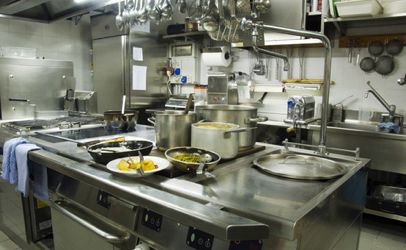
At least 269 people are suspected to have fallen ill in an outbreak of E. coli O157:H7 after eating at a restaurant in Belfast, Northern Ireland’s Public Health Agency announced on Sunday. This is by far the largest E. coli outbreak in the nation’s history.
 The number ill consist of 90 laboratory-confirmed cases and another 179 probable cases. Probable cases are those with exposure and corresponding symptoms, but who have not been tested for E. coli infection in a clinical laboratory.
The restaurant, Flicks, was also connected to an E. coli outbreak in August that sickened four people. On Sunday the PHA announced that the two outbreaks were isolated incidents and the bacteria involved differed genetically.
Flicks voluntarily closed on October 9 pending a public health investigation into the cause of the outbreak. In an interview with BBC, a Northern Ireland health official said that no E. coli outbreaks in the country prior to this had exceeded 20 cases.
Illnesses began to arise around September 24, and the PHA encourages anyone who ate at the restaurant and experienced symptoms of E. coli infection to contact them immediately.

By News Desk
Update: Since this article was originally published, eight more cases of E. coli O157:H7 were confirmed to be part of this outbreak, bringing the total number of confirmed cases to 98. There are an additional 175 suspected cases, according to North Ireland’s Public Health Agency, as reported by BBC News on the afternoon of Monday October 22.
At least 269 people are suspected to have fallen ill in an outbreak of E. coli O157:H7 after eating at a restaurant in Belfast, Northern Ireland’s Public Health Agency announced on Sunday. This is by far the largest E. coli outbreak in the nation’s history.
 The number ill consist of 90 laboratory-confirmed cases and another 179 probable cases. Probable cases are those with exposure and corresponding symptoms, but who have not been tested for E. coli infection in a clinical laboratory.
The restaurant, Flicks, was also connected to an E. coli outbreak in August that sickened four people. On Sunday the PHA announced that the two outbreaks were isolated incidents and the bacteria involved differed genetically.
Flicks voluntarily closed on October 9 pending a public health investigation into the cause of the outbreak. In an interview with BBC, a Northern Ireland health official said that no E. coli outbreaks in the country prior to this had exceeded 20 cases.
Illnesses began to arise around September 24, and the PHA encourages anyone who ate at the restaurant and experienced symptoms of E. coli infection to contact them immediately.
Monday, 22 October 2012
Kroger to Stop Selling Sprouts
Kroger to Stop Selling Sprouts:
By James Andrews
 Kroger, the largest grocery chain in the U.S., announced on Friday that its stores will no longer carry sprouts, one of the foods most commonly associated with foodborne illness outbreaks.
“After a thorough, science-based review, we have decided to voluntarily discontinue selling fresh sprouts,” said Payton Pruett, Kroger’s vice president of food safety in a press release. “Testing and sanitizing by the growers and safe food handling by the consumer are the critical steps to protect against food-borne illness. Sprouts present a unique challenge because pathogens may reside inside of the seeds where they cannot be reached by the currently available processing interventions. Out of an abundance of caution, the Kroger Family of Stores will no longer sell fresh sprouts or procure other foods that are produced on the same equipment as sprouts.”
The change will take effect Monday, October 22. The company said it is willing to review its policy if future technologies and practices allow sprouts to grow without the risk of internalizing pathogens.
Earlier this year, sub-sandwich chain Jimmy John’s dropped sprouts from its menu in February after the item tied the chain to five outbreaks over the course of four years. In January, deli chain Jason’s Deli also cited recent outbreaks when announcing it would not serve sprouts for at least the remainder of 2012.
Sprouts have caused at least 54 foodborne illness outbreaks worldwide since 1990, including the summer 2011 E. coli outbreak in Germany that killed 53 people and sickened roughly 4,000.
In 2000, food safety attorney and Food Safety News publisher Bill Marler called for the U.S. Food and Drug Administration to require warning labels on raw sprout packaging.
Kroger operates 2,425 supermarkets and department stores in 31 states under two dozen names including Kroger, City Market, Dillons, Jay C, Food 4 Less, Fred Meyer, Fry’s, King Soopers, QFC, Ralphs and Smith’s.

By James Andrews
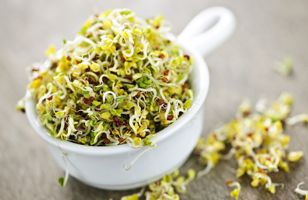 Kroger, the largest grocery chain in the U.S., announced on Friday that its stores will no longer carry sprouts, one of the foods most commonly associated with foodborne illness outbreaks.
“After a thorough, science-based review, we have decided to voluntarily discontinue selling fresh sprouts,” said Payton Pruett, Kroger’s vice president of food safety in a press release. “Testing and sanitizing by the growers and safe food handling by the consumer are the critical steps to protect against food-borne illness. Sprouts present a unique challenge because pathogens may reside inside of the seeds where they cannot be reached by the currently available processing interventions. Out of an abundance of caution, the Kroger Family of Stores will no longer sell fresh sprouts or procure other foods that are produced on the same equipment as sprouts.”
The change will take effect Monday, October 22. The company said it is willing to review its policy if future technologies and practices allow sprouts to grow without the risk of internalizing pathogens.
Earlier this year, sub-sandwich chain Jimmy John’s dropped sprouts from its menu in February after the item tied the chain to five outbreaks over the course of four years. In January, deli chain Jason’s Deli also cited recent outbreaks when announcing it would not serve sprouts for at least the remainder of 2012.
Sprouts have caused at least 54 foodborne illness outbreaks worldwide since 1990, including the summer 2011 E. coli outbreak in Germany that killed 53 people and sickened roughly 4,000.
In 2000, food safety attorney and Food Safety News publisher Bill Marler called for the U.S. Food and Drug Administration to require warning labels on raw sprout packaging.
Kroger operates 2,425 supermarkets and department stores in 31 states under two dozen names including Kroger, City Market, Dillons, Jay C, Food 4 Less, Fred Meyer, Fry’s, King Soopers, QFC, Ralphs and Smith’s.
Thursday, 4 October 2012
Canadian Health Authorities Defend Response to E. coli Outbreak and Recall
Canadian Health Authorities Defend Response to E. coli Outbreak and Recall:
Federal Agriculture Minister Gerry Ritz, along with Canadian Food Inspection Agency (CFIA) President George Da Pont, went personally to the closed and suspended XL Foods Inc. beef processing plant in Brooks, Alberta yesterday.
Before it was over, Ritz had pulled the rug out from under opposition Members of Parliament (MPs) and Da Pont, who recently moved over to the CFIA from the Coast Guard, managed to rewrite the timeline for what is suppose to be the largest beef recall in Canadian history.
While all that was going on, sources south of the border said it was likely the recalled Canadian beef laced with E. coli O157:H7 was distributed in a large enough amount in the U.S. than one or more states will likely soon join Canada by reporting on individuals in the U.S. who are infected with the pathogen.
But that has not happened yet. In Canada, at least five people, including three from the same family, are suffering from E. coli infections from eating Kirkland brand strip steaks that originated at XL and were purchased at Costco.
Another five cases cases in Alberta are under investigation along with up to 13 in Saskatchewan.
Ritz and Da Pont traveled from Ottawa to southern Alberta to visit the 40 CFIA inspectors and six veterinarians who are responsible for food safety at the big XL beef plant. Then they meet with reporters.
"While we understand that ranchers, farmers and industry need a strong processing sector, we all agree that the success of the industry must be founded on food safety, " Ritz told the media.
"That is why the XL Foods plant will only resume operation when the President of the Canadian Food Inspection Agency has confirmed in writing to me that the health of Canadians is not at risk."
That means Da Pont will decided when XL can produce safe beef and send its 2,000 employees back to work.
Da Pont also used the Ritz tour to reshape a bit of the history of the XL recall. He said CFIA came up with a positive E. coli test on XL beef within hours after a random U.S. border check did so on Sept. 3.
It took ten more days for CFIA to officially begin its investigation of XL.
The CFIA President then said there was a delay in getting some initial information on how widespread the problem might be from XL. Da Pont seemed to be saying that if the government's stalled Safe Food for Canadians Act was law, XL would have been compelled to provide the information without delay.
Ritz staff cut Da Pont off from further explaining this statement, saying he'd be available for one-on-one interviews.
The XL recall is the biggest food safety event to hit Canada since the 2008 Listeria outbreak, which killed 23 mostly elderly Canadians who ate contaminated ready-to-eat meats made by Maple Leaf Foods in Toronto.
As in 2008, opposition MP's are taking shots at Ritz, saying the minister is putting Canadian food safety at risk. Ritz and Prime Minister Harper defended the actions of their government, saying they've hired more than 700 new food safety inspectors, including 170 more meat inspectors.
"This Government immediately accepted all fifty seven recommendations of the Weatherill Report and it's why we have acted on all of them," Ritz said, referring to the independent recommendations that were made to the government after the deadly Listeria outbreak.
The XL recall is being called the largest in Canadian history, not on the volume or weight involved, but by the number of products. Asked about that, CFIA provided Food Safety News with this statement:
"Unfortunately, volume of product by weight is not a figure that we track, as it is not of use when determining what product needs to be recalled, nor is it a useful statistic for informing consumers of what products have been recalled.
"Rather, our focus is on distribution of product, retail stores where it has been put on shelves, product names, UPC codes etc., which assist distributors, retailers and consumers in identifying if they have product which has been recalled."
Since Sept. 16, XL Foods has recalled more than 1,500 beef products. Food Safety News learned from the U.S. Department of Agriculture that at least 890,000 pounds of recalled XL beef went to at least 40 states in the U.S.
Canadian Beef Recall Grows, Again
Canadian Beef Recall Grows, Again: 

The largest beef recall in Canadian history grew even larger Monday with the government's announcement that more products are being taken off the market for potential E. coli contamination.
Alberta-based XL Foods, Inc. is voluntarily recalling 260 more varieties of beef, announced the Canadian Food Inspection Agency in a health alert yesterday. These newly recalled meats have been added to hundreds of other beef products recalled by the company in the past two weeks.
The problem was initially discovered by U.S. inspectors who discovered E. coli O157:H7 in ground beef samples taken at the Canadian border in Canada. CFIA conducted its own testing the next day, but the first recall was not initiated until September 16.
Since that time, CFIA has expanded the recall 13 times and U.S. retailers have announced recalls of beef products from XL sold in at least 41 states. Over 1,100 beef products have hit the chopping block as part of this recall.
At least four illnesses have been linked to beef strips manufactured by XL and sold at Costco, and five more are known to be under investigation.
Some beef products listed in this latest recall - including rump roast, soup bones and tenderized hip steak among others - have not been listed in previous recalls updates linked to the outbreak, which have mainly included ground beef and various whole and tenderized cuts.
Items subject to this recall were manufactured on the same dates as XL's previously recalled ground beef products, according to CFIA. Specifically, these production dates include August 24, 27, 28, 29 and September 5, 2012.
A full list of the newly recalled meats is available here.
Affected products were sold in retail stores across the country, including Dominion, Extra Foods, Real Atlantic, Save Easy, ValuFoods, Valu-mart, VillageMart and Zehrs, among others.
At least one-third of the Canadian beef supply is estimated to be affected by XL's recent recalls.
CFIA has closed the XL plant in Alberta until further notice, although Monday before the latest recall was issued there was talk of the plant reopening within the next few days.
Canadian officials say this recall investigation has prompted CFIA to examine product tracking requirements for companies in order to improve traceback.
"If they don't put the dots together to get the big picture for the day, they may be missing something. And that's where we have an improvement and we're going to make something happen," said Richard Arsenault, the agency's director of meat inspection, according to the Edmonton Journal.
Has Imported Dutch Smoked Salmon Sickened 100 Americans?
Has Imported Dutch Smoked Salmon Sickened 100 Americans?: Several states, the U.S. Food and Drug Administration, the Department of Agriculture and the Centers for Disease Control are investigating a spike in Salmonella Thompson cases in the U.S. -- 85 people in 27 states -- that may be linked to the same contaminated smoked salmon that has sickened 200 people in the Netherlands.
On Tuesday, Dutch health officials revealed that they had identified smoked salmon made by Dutch fish processors Foppen as the common source of their ongoing outbreak and recalled the products. They also said the same smoked salmon had been distributed in the U.S. and claimed that the outbreak had sickened 100 Americans.
According to agency spokeswoman Lola Russell, CDC has been investigating a spike in Salmonella Thompson illnesses since last month (health officials might normally see 30 reported cases of this strain of Salmonella during this time frame). Russell said epidemiologists have not yet identified a common food source.
Russell said it's likely there are more illnesses that have not been reported, but it's also likely that not all 85 cases are linked to the same source.
So why did Dutch officials tell the press that there were 100 illnesses in the United States linked to their smoked salmon? Russell explained that CDC often communicates with health agencies abroad and during a conversation with the Dutch National Institute for Public Health (RIVM) someone from CDC may have stated that there were "around 100" illnesses in the U.S.
Of the reported cases, 10 individuals were hospitalized and there have been no reports of death. States have been reporting illnesses since July. CDC's investigation is ongoing, but the agency has so far declined to identify which states have reported illnesses.
Phyllis Entis, who runs eFoodAlert, a clearinghouse for recall information, has compiled a list of some of the states that are known to be investigating illnesses. U.S. public health officials have said that so far there is no epidemiological link between the illnesses and smoked salmon. According to eFoodAlert, the recalled Dutch smoked salmon was sold in the U.S. by Costco under both the Foppen and Kirkland brands.
On Tuesday, Dutch health officials revealed that they had identified smoked salmon made by Dutch fish processors Foppen as the common source of their ongoing outbreak and recalled the products. They also said the same smoked salmon had been distributed in the U.S. and claimed that the outbreak had sickened 100 Americans.
According to agency spokeswoman Lola Russell, CDC has been investigating a spike in Salmonella Thompson illnesses since last month (health officials might normally see 30 reported cases of this strain of Salmonella during this time frame). Russell said epidemiologists have not yet identified a common food source.
Russell said it's likely there are more illnesses that have not been reported, but it's also likely that not all 85 cases are linked to the same source.
So why did Dutch officials tell the press that there were 100 illnesses in the United States linked to their smoked salmon? Russell explained that CDC often communicates with health agencies abroad and during a conversation with the Dutch National Institute for Public Health (RIVM) someone from CDC may have stated that there were "around 100" illnesses in the U.S.
Of the reported cases, 10 individuals were hospitalized and there have been no reports of death. States have been reporting illnesses since July. CDC's investigation is ongoing, but the agency has so far declined to identify which states have reported illnesses.
Phyllis Entis, who runs eFoodAlert, a clearinghouse for recall information, has compiled a list of some of the states that are known to be investigating illnesses. U.S. public health officials have said that so far there is no epidemiological link between the illnesses and smoked salmon. According to eFoodAlert, the recalled Dutch smoked salmon was sold in the U.S. by Costco under both the Foppen and Kirkland brands.
Food Source Might Be Responsible for 10,000 German Illnesses
Food Source Might Be Responsible for 10,000 German Illnesses:
As many as 10,000 German school children stricken since Friday by a vomiting virus may be suffering from eating cafeteria food, health authorities say.
While the investigation is far form over, attention has focused on the food services company called Sodexo that supplies cafeteria food to many schools and day care centers in areas of German experiencing the outbreak.
Berlin health officials expect most children will recover from the norovirus symptoms within a few days, but in the meantime the young people are suffering from vomiting, diarrhea, nausea, stomach pain, fever, and head and body aches.
Laboratory testing is currently underway to determine the cause of the massive outbreak of illnesses. The prestigious Robert Koch Institute has told the media that a single food supplier did serve all the schools and day care facilities reporting illnesses.
Until the source of the virus is found and the outbreak is over, German school and pre-school children are being encouraged to pack their own lunches.
Children who are ill are being told to remain hydrated and to avoid sugary beverages because such drinks can make the symptoms of diarrhea worse.
A task force of state and national officials was set up on Friday to investigate the cause of the illnesses, as the number of sick German school children grew rapidly,
The Robert-Koch Institute told the newspaper Die Welt that the ill children attend schools and pre-schools in Berlin, Brandenburg, Saxony and Thuringia.
Consumer Affairs Minister Ilse Aigner said the goal was "to find the cause of the illnesses as soon as possible and to stop its entry into the food chain."
A spokesman for Sodexo said less than five percent of the schools it serves has sick children. He said the cause of the illnesses may be a norovirus that is not food related.
"The reason that almost all of the children ate food from our kitchens is simply because we deliver food to a lot of schools. We hope that the children feel better soon," he said.,
However, the Robert-Koch-Institute told Die Welt that it stood to reason that the children were suffering from a food-borne illness, and that some of them had tested positive for the norovirus.
The norovirus, which causes vomiting and diarrhea , is highly contagious, and can be transmitted by contaminated food or water, infected people, or contaminated surfaces.
Some German schools have closed as a precautionary measure.
Monday, 1 October 2012
EFSA approves safety of GM oilseed rape
EFSA approves safety of GM oilseed rape:
The European Food Safety Authority (EFSA) has approved the safety of a genetically modified (GM) oilseed rape for use in foods and feed on the EU market.
Russia bans GM maize in wake of controversial Monsanto cancer study
Russia bans GM maize in wake of controversial Monsanto cancer study:
Russian authorities have places a temporary ban on imports of genetically-modified maize produced by Monsanto in the wake of last weeks’ controversial GM cancer study.
Gut bacteria changes touted as a cause of diabetes
Gut bacteria changes touted as a cause of diabetes:
Major changes to the profile of our gut bacteria ecosystem are associated with the development of type two diabetes, according to ‘exciting’ new meta-genomic data published in Nature.
Warning on Czech spirits ban (update 2)
Warning on Czech spirits ban (update 2): The Food Standards Agency is reminding visitors to the Czech Republic of the continued ban on the sale of domestic (Czech) spirits containing more than 20% alcohol. The FSA has issued a second updated list of Czech brands that may have been contaminated by methanol. This follows reports that the number of methanol poisoning-related deaths in the Czech Republic is 24.
Subscribe to:
Comments (Atom)